Pythagorean Theorem Calculator with Steps
Calculator
Please select the side you wants to calculate and enter the value of other two sides.
Pythagoras Theorem Formula
In a right angled triangle: the square of the hypotenuse is equal to the sum of the squares of the other two sides.Suppose right triangle with sides a and b and hypotenuse c then
c2 = a2 + b2
Or c = √(a2 + b2) Or a = √(c2 - b2) Or b = √(c2 + a2) 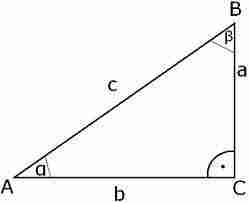
Definition & Examples :
The Pythagorean Theorem is a fundamental rule in geometry that describes the relationship between the three sides of a right-angled triangle. It states that the square of the longest side (the hypotenuse) is exactly equal to the sum of the squares of the other two sides.
The formula for hypotenuse
c =  √(a2 + b2)
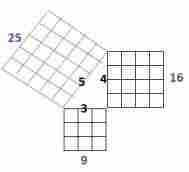
1. Find the hypotenuse where two sides a = 4 and b = 3.
= √(42 + 32)
= √(4X4 + 3x3)
= √(16 + 9)
= √(25)
=5
2. Find the hypotenuse where two sides a = 6 cm and b = 8 cm.
The formula for hypotenuse c = √(a2 + b2)
= √(62 + 82)
= √(6X6 + 8x8)
= √(36 + 64)
= √(100)
=10 cm